
Introduction
Physical keys are a liability. They get lost, copied and forgotten. When an employee leaves, there is no guarantee their key comes back — and no record of where it has been. Smart locks eliminate these problems by replacing mechanical keys with digital credentials that can be issued, tracked and revoked instantly.
This guide explains what smart locks are, how they work, and what UK organisations should consider when evaluating them.
What is a smart lock?
A smart lock is an electronic locking device that grants or denies access based on a digital credential rather than a physical key. Credentials can take several forms: RFID cards, NFC-enabled smartphones, PIN codes or biometric data.
Unlike traditional locks, smart locks log every access event, can be managed remotely and integrate with wider access control and security platforms. For organisations managing multiple sites, large numbers of staff or strict regulatory compliance requirements, this visibility is essential.
How do smart locks work?
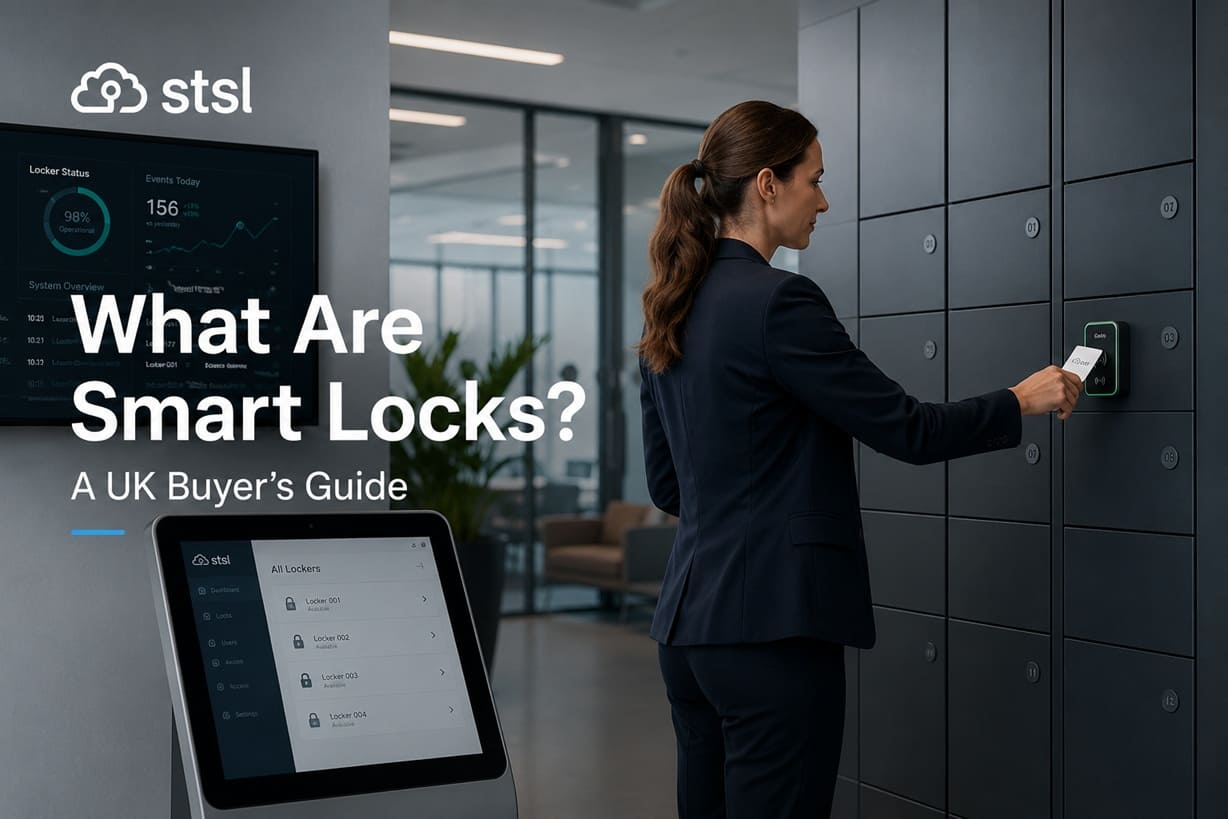
When a user presents a credential — a staff card, for example — the lock reads it, checks it against an access control system or local permissions database, and either grants or denies access. The event is logged with a timestamp and user identity.
Modern smart locks like GoTo Lock communicate wirelessly with a central management platform, allowing administrators to update permissions, trigger lockdowns and pull compliance reports from anywhere in the world.
Types of smart lock for UK organisations
- RFID locker locks — use contactless smart cards (iCLASS, MIFARE, DESFire) already carried by staff
- NFC locker locks — work with modern smartphones via Host Card Emulation (HCE)
- Wireless locker locks — battery-powered with cloud connectivity, no cabling required
- Electronic cabinet locks — for medicine cupboards, document storage and controlled environments
Who uses smart locks in the UK?
Healthcare
NHS trusts use smart locks to control access to medication storage, staff lockers and secure rooms, eliminating the infection control risks associated with shared physical keys and providing the audit trails required for regulatory compliance.
Education
Universities and schools deploy smart locks for student lockers, reducing administration overhead and integrating with existing campus card systems so students use one credential for everything.
Corporate offices
Organisations with hybrid working policies use smart locks to manage hot lockers, ensuring flexible desk environments operate without key management overhead or security gaps.
Government and public sector
High-security environments require the audit trails, access governance and tamper-resistant hardware that enterprise smart locks provide.
Hospitality
Hotels use smart locks for staff and guest locker access, reducing key management overhead and enabling fast check-in and check-out workflows.
Retail
On-demand staff and contractor locker access across busy retail environments, managed centrally without physical key administration.
What to look for when buying smart locks in the UK
- Retrofit compatibility — can the lock install on your existing lockers without replacing furniture?
- Credential compatibility — does it support the cards your staff already carry?
- Integration — does it connect with your existing access control platform (LenelS2, Gallagher, Nedap)?
- Centralised management — can you manage all locks from a single dashboard across multiple sites?
- UK GDPR compliance — does the system provide audit trails and support data subject access requests?
STSL GoTo Lock
GoTo Lock is STSL’s retrofit smart locker lock, designed for UK organisations. It installs on virtually any existing locker in minutes, supports all major RFID and NFC credentials, and integrates with LenelS2, Gallagher, Nedap AEOS, Verkada and C-Cure 9000. Managed through GoTo Secure, it gives security teams real-time visibility and remote control across every site.
See GoTo Lock in action
Book a free demo to see GoTo Lock in action, or contact STSL to discuss your requirements.
Considering smart locks?
Speak with our UK team about retrofit compatibility, credential technologies and integration with your existing access control system.